

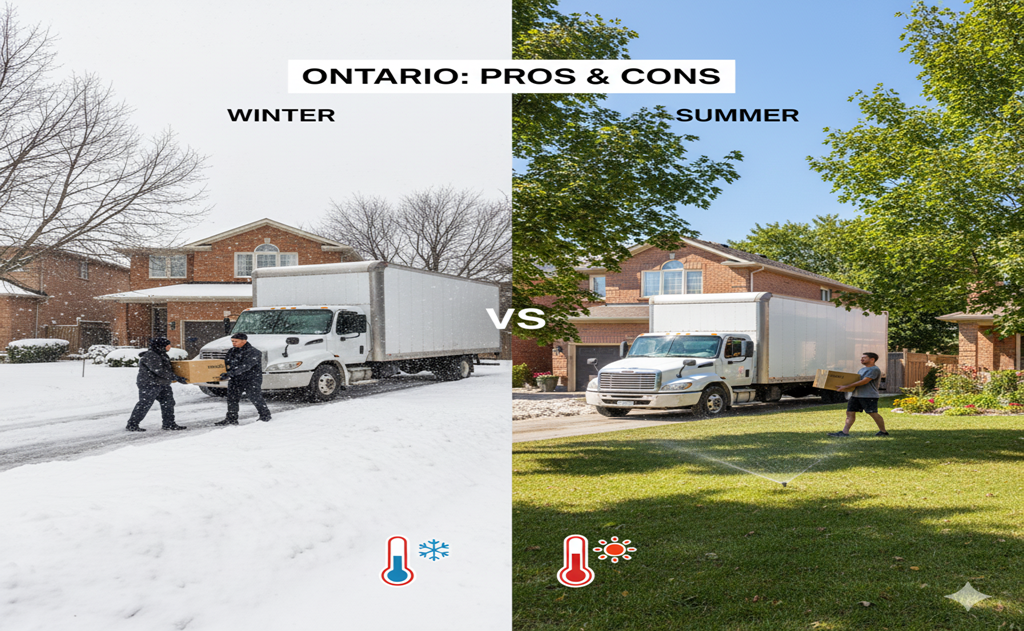
Moving in Ontario comes with unique challenges and opportunities depending on the season. Winter brings snow, ice, and cold temperatures that can complicate logistics, while summer offers warm weather and longer days but comes with higher demand and costs. Understanding these seasonal differences is crucial for planning a smooth and stress-free move.
So, we’ll compare both conditions, explore the pros and cons of moving in winter or summer, and provide expert tips for both local and long-distance relocations, helping you make an informed decision that fits your schedule, budget, and comfort.
Winter and Summer Moving Conditions in Ontario
Winter Moving Conditions
Ontario winters, typically spanning December through March, are characterized by snow, ice, and sub-zero temperatures, which can make moving more challenging. Roads can become slippery, driveways and sidewalks icy, and sudden snowstorms may delay trucks or create safety hazards.
Regional differences also play a role: Toronto tends to have milder winters with less extreme cold, Ottawa experiences heavy snowfall and temperatures often dropping below -20°C, while Northern Ontario can face harsher conditions with deeper snow and prolonged freezing periods. Shorter daylight hours mean moves must be planned carefully to ensure enough time for loading and unloading safely.
Summer Moving Conditions
Summer in Ontario, generally June through August, brings warm, dry weather and longer daylight hours, making moving generally easier and more predictable. Roads are clear, highways are safer for long-distance trips, and parking or elevator access in urban areas is less affected by weather.
However, summer moves coincide with peak demand, so scheduling can be more difficult and costs are higher. Hot temperatures and humidity can also increase physical strain on movers and make transporting heat-sensitive items more challenging.
With these seasonal factors in mind, it’s important to weigh the advantages and disadvantages of moving in winter versus summer to make the best choice for your schedule, budget, and comfort.
The Pros and Cons of Moving in Winter in Ontario
Here’s a closer look at the benefits and drawbacks to help you decide if a winter move fits your needs.
Pros
- Lower Moving Costs – Winter is the off-season for movers, so rates are often discounted. You can get larger trucks or premium services for less.
- Greater Scheduling Flexibility – Movers have more open dates, letting you choose your ideal time or easily reschedule if snow affects plans.
- Faster and Easier Booking Process – Fewer clients mean quicker confirmations and more personalized service.
- Less Traffic and Congestion – Roads are less crowded, allowing faster and smoother travel across Ontario.
- Easier Access to Elevators and Loading Zones – Fewer people moving means less competition for elevators and parking spaces.
- More Attention and Care from Movers – Movers can focus more on your move and take extra precautions for cold-weather protection.
- Quicker Real Estate Transactions – Housing demand is lower in winter, which can lead to better deals and faster closings.
- Cooler Temperatures for Heavy Lifting – Cold air keeps movers from overheating, making the work more manageable.
- Fresh Start Before Spring – Moving early in the year gives you time to settle before the busy spring season.
Cons
- Unpredictable Weather Conditions – Snow, ice, and freezing rain can delay or complicate your move.
- Safety Concerns – Slippery paths and icy stairs increase the risk of accidents and injuries.
- Shorter Daylight Hours – Limited daylight reduces working time and may slow down the move.
- Risk of Damage to Belongings – Cold temperatures can harm electronics, instruments, and delicate items.
- Extra Preparation and Cleanup – You’ll need to shovel, salt, and protect floors before and after the move.
- Higher Risk of Delays or Cancellations – Storms or icy roads can cause schedule disruptions.
- Heating and Energy Costs – Open doors during moving let in cold air, raising heating expenses.
- Storage and Transportation Challenges – Not all facilities are heated, putting sensitive items at risk.
- Limited Service Availability – Some moving-related services may be closed or delayed during the winter holidays.
- Physical and Emotional Fatigue – Cold weather and heavy clothing make the process more tiring and stressful.
The Pros and Cons of Moving in Summer in Ontario
Understanding these factors allows you to prepare adequately and make the most of the season if you choose to move during the summer.
Pros
- Ideal Weather Conditions – Warm, dry days make moving safer and more comfortable for both movers and homeowners.
- Longer Daylight Hours – Extended daylight allows for more working time, reducing pressure to finish before dark.
- Easier Travel and Navigation – Clear roads and predictable driving conditions make long-distance moves smoother and faster.
- Perfect Time for Families – Many families prefer summer because school is out, making it easier for children to adjust after relocation.
- Higher Real Estate Activity – The housing market is at its peak, giving you more choices for buying, selling, or renting.
- No Snow or Ice to Manage – You won’t need to shovel, salt, or deal with slippery driveways and frozen paths.
- More Availability of Supporting Services – Cleaners, painters, and contractors are easier to schedule in the summer.
- Opportunity for Home Improvement – The warm season lets you unpack, paint, or renovate without worrying about cold or damp conditions.
- Easier Storage Access – Storage units and moving trucks are easier to access without dealing with snow or frozen locks.
Cons
- Higher Moving Costs – Summer is peak season for movers, leading to higher rates and surcharges due to high demand.
- Limited Scheduling Flexibility – Movers get booked weeks in advance, making it harder to secure your ideal date.
- Traffic Congestion – Roads are busier in summer, which can delay moving trucks.
- Heat and Humidity – Hot weather can make heavy lifting exhausting and even cause heat-related fatigue.
- Faster Wear on Items – Heat can damage items such as candles, electronics, or delicate furniture finishes during transport.
- Increased Competition for Housing – More people moving means fewer available rentals and faster property turnover.
- Parking and Elevator Challenges – With many others moving, you may face scheduling conflicts for building access.
- Less Personalized Service – Movers handle multiple jobs per day during the summer, so you may receive less individualized attention.
- Possible Higher Utility Bills – Air conditioning often runs throughout the move, increasing energy use.
- Greater Stress Levels – Tight schedules, high costs, and hot weather can make summer moves feel more rushed and overwhelming.
Expert Tips for a Successful Winter Move in Ontario
A winter move in Ontario requires careful planning, open communication, and extra preparation to handle the cold and unpredictable weather. These practical steps will help ensure everything goes smoothly, no matter how harsh the season gets.
Plan Ahead and Communicate
Start by confirming all details with your moving company well in advance. Ask about their winter weather policies, including what happens if a snowstorm or road closure delays your move. It’s also wise to arrange a backup moving date in case conditions become unsafe.
Stay in touch with your movers leading up to moving day—weather in Ontario can shift quickly, and constant communication ensures everyone is prepared for last-minute changes. Clear updates about timing, parking, and access points can prevent confusion once the movers arrive.
Prepare Your Home and Driveway
A clean and safe pathway is essential during a winter move. Shovel your driveway and walkways thoroughly, and spread salt or sand to reduce slipping hazards. Inside your home, protect your floors by laying down plastic sheets, cardboard, or mats to catch melting snow and mud
To keep everyone comfortable, offer hot drinks like coffee or cocoa and have clean towels or cloths ready for drying hands and equipment. These small touches can make a big difference during cold-weather moves.
Protect Fragile and Temperature-Sensitive Items
Cold temperatures can cause serious damage to delicate items. Use extra padding and insulated boxes for electronics, glassware, and wooden furniture. If possible, request a temperature-controlled moving vehicle or keep sensitive items in your personal vehicle to avoid exposure to freezing air.
For plants or liquids, wrap them in thermal blankets and transport them last to minimize time in the cold.
Keep Essentials Handy
Winter conditions can slow travel, so always keep an emergency essentials kit within reach. Pack warm clothes, gloves, flashlights, snacks, bottled water, and phone chargers in a small box or bag.
Also, keep important documents, medications, keys, and valuables with you rather than in the moving truck. This ensures you have access to everything you need if there’s a delay or overnight stop.
Local vs. Long-Distance Moves: Winter or Summer
Local Moves
Local moves, typically within the same city or nearby towns, are generally quicker and easier to manage. In winter, shorter distances reduce exposure to snowy or icy roads, making it easier to complete the move safely. Clearing driveways, salting walkways, and starting early can help avoid accidents and make the process smooth.
In summer, longer daylight hours and predictable weather make local moves less stressful. However, traffic congestion, especially in larger cities like Toronto, can slow down loading and delivery.
Long-Distance Moves
Long-distance moves, such as relocating across Ontario or to another province, require more preparation and coordination. In winter, icy highways, snowstorms, and freezing temperatures can cause delays or rerouting. Extra precautions, like insulated packing and experienced movers, are necessary to protect belongings.
In summer, the weather is more predictable, allowing for smoother travel, but peak season demand increases costs and may limit booking availability. Heat-sensitive items also require careful handling or climate-controlled transport.
Storage and Timing Considerations
For long-distance moves, storage solutions often become essential. In winter, climate-controlled units protect items from freezing conditions, while in summer, ventilation helps prevent heat or humidity damage.
Timing flexibility is important in both seasons—winter moves should include backup dates in case of storms, while summer moves require early bookings due to high demand.
No matter the season or distance, moving can be challenging—but Northern Movers makes it simple. Our experienced team provides professional moving services in Ontario, handling winter and summer moves with care.
We offer climate-controlled options, flexible scheduling, and personalized support to protect your belongings and ensure a smooth relocation. Reach out to Northern Movers today to book your move and enjoy peace of mind while we take care of the heavy lifting.
Environmental Impact and Energy Efficiency
Moving in winter can actually be more energy-efficient and eco-friendly than in summer. Colder temperatures and lighter traffic contribute to a smaller carbon footprint.
Why Winter Moves Can Be Greener:
- Reduced traffic means shorter driving times and less idling fuel waste.
- Engines run more efficiently in cool weather compared to hot summer conditions.
- Fewer moving trucks on the road lower overall emissions.
Sustainable Moving Practices:
- Use reusable plastic bins instead of disposable cardboard boxes.
- Wrap fragile items with towels, blankets, or clothing instead of bubble wrap.
- Donate or recycle unwanted items before moving day to cut down waste.
- Choose movers who offer eco-friendly trucks or carbon offset options.
- Reuse or return moving supplies after the move to reduce landfill waste.
By combining efficient winter scheduling with sustainable packing habits, your Ontario winter move can be both cost-effective and environmentally responsible.
Pros and Cons of Winter and Summer Move Summary Table
This summary table highlights the key differences between winter and summer moves in Ontario, helping you compare more at a glance.
| Factor | Winter Move | Summer Move |
| Costs | Lower moving costs due to off-season rates; potential to get larger trucks or premium services for less. | Higher moving costs as summer is peak season; surcharges common due to high demand. |
| Scheduling Flexibility | Greater flexibility; easier to book preferred dates and reschedule if needed. | Limited flexibility; movers often booked weeks in advance. |
| Booking Process | Faster confirmations and more personalized service due to fewer clients. | Less personalized service; movers handle multiple jobs per day. |
| Traffic and Roads | Less congestion; roads less crowded, making travel faster and smoother. | Busier roads and traffic delays, especially in urban areas. |
| Access to Elevators/Loading Zones | Easier access to elevators, loading docks, and parking spots. | Higher competition for elevators and parking; scheduling conflicts possible. |
| Mover Attention | More hands-on care from movers; extra precautions for cold weather protection. | Less individualized attention; movers focus on multiple jobs. |
| Real Estate Timing | Quicker transactions possible; lower housing demand may help with deals and faster closings. | Increased competition for housing; fewer available rentals and faster turnover. |
| Weather Conditions | Cold, unpredictable weather; snow, ice, freezing rain can delay or complicate moves. | Warm, dry, and predictable weather; safer and more comfortable for moving. |
| Daylight Hours | Shorter daylight limits working time; may slow the move. | Longer daylight allows more working time; reduces pressure to finish before dark. |
| Safety | Slippery paths, icy stairs, and roads increase risk of accidents. | Fewer safety hazards; no snow or ice to manage. |
| Belongings | Cold can damage electronics, plants, instruments, and fragile items; need extra protection. | Heat and humidity can damage certain items like electronics, furniture finishes, or candles. |
| Preparation and Cleanup | Extra effort required: shoveling, salting, protecting floors before and after move. | Less preparation needed; no snow or ice to clear. |
| Heating/Energy Costs | Open doors increase heating usage; extra energy costs. | Possible higher utility costs if air conditioning runs during the move. |
| Storage/Transportation | Risk for sensitive items if storage or truck isn’t climate-controlled. | Easier storage access; less concern about freezing or moisture damage. |
| Supporting Services | Some services like cleaners or appliance installers may be unavailable or limited. | More availability of supporting services; easier to schedule contractors. |
| Physical/Emotional Fatigue | Cold, heavy clothing, and harsh conditions increase fatigue. | Hot weather, humidity, traffic, and tight schedules can make the move exhausting. |
| Opportunity for Home Prep | Settle in before spring; start fresh early in the year. | Ideal for home improvement: unpack, paint, or renovate during warm season. |
Final Thoughts: Is a Winter or Summer Move in Ontario Right for You?
Choosing between a winter or summer move in Ontario depends on your priorities and circumstances. Winter moves can save money, offer flexible scheduling, less traffic, and more personalized attention from movers, but they come with challenges like snow, ice, shorter daylight, and the need to protect sensitive items.
Summer moves provide ideal weather, longer daylight, easier access to elevators and parking, and more reliable support services, yet they are costlier, busier, and physically more demanding due to heat and traffic.
Ultimately, careful planning, hiring experienced movers, and preparing for seasonal conditions are key to ensuring a smooth and successful move, regardless of the time of year.